
 Call (832) 856-9586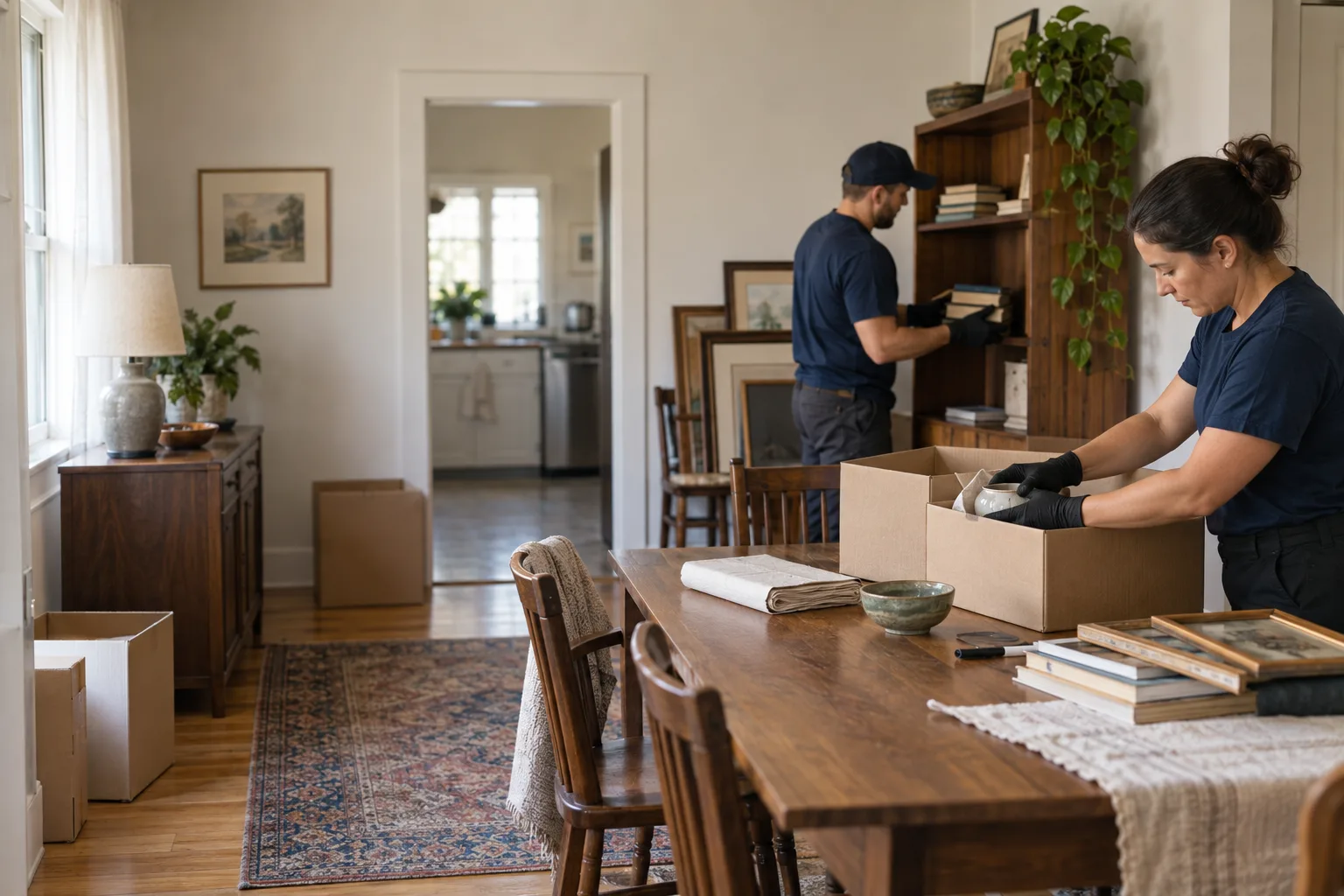
Do not start by filling trash bags. First identify who can authorize decisions, protect documents and keepsakes, then separate the remaining contents into clearly marked groups. This order reduces the chance that an important item disappears into a general removal pile.
Confirm who can make decisions
An estate cleanout can involve an executor, administrator, surviving family members, a landlord, or a property manager. The crew should not be asked to settle ownership questions. Name the person who can approve removal and pause disputed items until that person decides.
For a rented apartment, confirm when possession has legally returned to the property owner and whether any notice or storage obligation still applies. Ask a qualified Texas attorney when the facts are unclear.
Protect documents, medication, and keepsakes
Walk the apartment before removal work begins. Check desks, drawers, file boxes, nightstands, coat pockets, books, framed art, and containers that may hold papers or small valuables. Set aside:
- Wills, trusts, deeds, titles, insurance records, and tax documents
- Identification, financial papers, checkbooks, and account records
- Medication, keys, devices, chargers, and access cards
- Photographs, letters, jewelry, collections, and family keepsakes
Do not leave papers with account numbers in an open removal pile. The Federal Trade Commission advises destroying sensitive documents before disposal to reduce identity-theft risk.
Build four visible sorting zones
| Zone | What belongs there | Decision needed |
|---|---|---|
| Protect | Documents, valuables, medication, keys, and personal devices | Move off-site or secure before cleanout work |
| Family review | Photos, letters, heirlooms, and disputed items | Name the person who will decide and set a review deadline |
| Confirmed destination | Items accepted by a buyer, family member, or donation program | Record the pickup or drop-off plan |
| Removal | Approved items with no other destination | Photograph and include them in the removal scope |
Use large plain labels that can be read from across the room. Keep the removal zone away from the protected and family-review zones. If a decision changes, move the item and its label together.
Prepare one removal list
Photograph each room after sorting. List large furniture, mattresses, appliances, electronics, bagged contents, and any material that may need separate handling. Add the floor, stairs, elevator, hallway turns, gate instructions, and legal loading area.
Final handoff check
- The authorized decision-maker approved the removal group.
- Documents, medication, keys, and valuables are secured.
- Donation or family pickups have confirmed dates.
- Unknown liquids, chemicals, batteries, and damaged items are flagged.
- Anything staying in the apartment is clearly marked.
Keep one copy of the approved list and take a final set of room photos. Clear records help everyone understand what the crew was asked to remove.
When the removal group is final, call or text (832) 856-9586 and review the apartment estate cleanout service details.
Source checked September 28, 2026: Federal Trade Commission guidance on protecting personal information. This guide is practical planning information, not legal advice.